In recent years, first-class, business-class and premium economy have stolen many of the headlines when it comes to air travel — and there’s a big reason for that.
Airlines have leaned heavily into premium seating, with the fancy suites and recliners serving as the biggest money-makers on the plane.
That has led to a ton of luxe new suites and features, like United’s Polaris Studios which debuted earlier this year with 27-inch screens.

At the same time, we’re also seeing some intriguing new innovations in economy, too.
To be clear, the seats aren’t suddenly getting wider, and the legroom isn’t magically improving.
But a growing number of airlines are rolling out some new options and upgrades that should ultimately lead to more enjoyable flights, without the need to pay thousands of dollars (or hundreds of thousands of points).
Wi-Fi that actually works (and is free)
For starters, there’s the Wi-Fi. It has long been a pain point for travelers, as they’d be stuck paying a fee for an often-spotty service.
But that’s rapidly changing.
Nearly all of the large U.S. carriers now offer — or have plans to offer — on-board internet free to members of their loyalty programs.
It’s also getting better.
Most U.S. airlines are installing or preparing to install ultrafast service from Starlink, which is widely regarded as the fastest Wi-Fi in the sky today.

The days of being disconnected when you fly are fast disappearing.
A headrest to make sleeping in coach easier
Whenever I sleep on a red-eye flight in coach, I tend to wake up with a sore neck.
This year, Emirates debuted a new feature that should help.
Its “U-Dream” setup has side wings that cradle your neck as you sleep. You can see what it looks like below.
Swipe to see me trying out a “generic” version of the concept at an aviation conference last year.
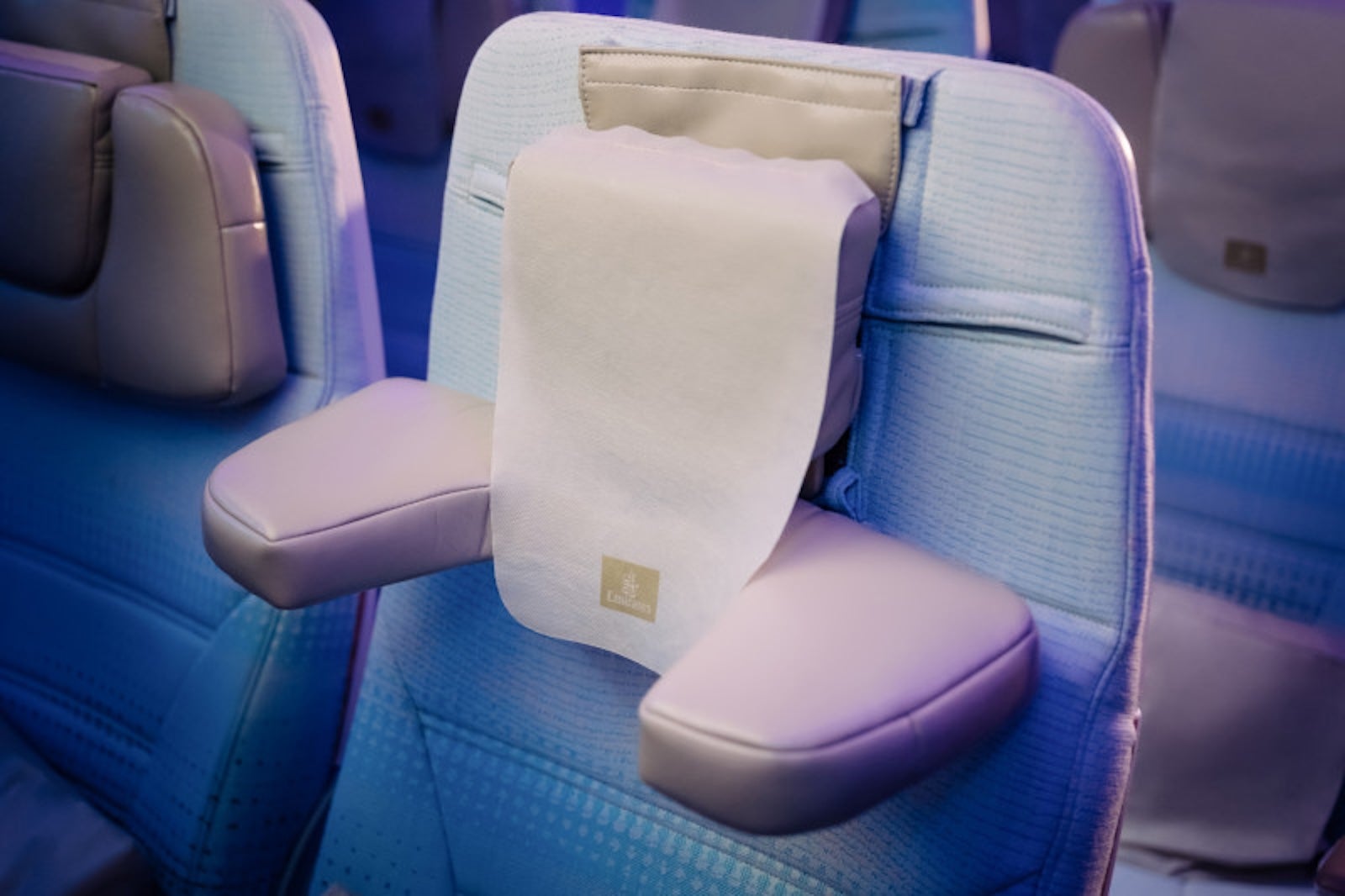

If you’re going to be in economy, that headrest looks like it would definitely make the experience more comfortable — especially on a long flight from the U.S. to Dubai.
Snack bars in the sky
No need to panic if you missed out on a Biscoff cookie or bag of pretzels.
Walk-up snack bars are popping up on some commercial planes, which double as a way to stretch your legs during a long flight — and get some sustenance at 35,000 feet.
United used the last row of its new Airbus A321XLR for a snack bar, which will be a nice option for passengers flying that single-aisle plane on long-haul routes.
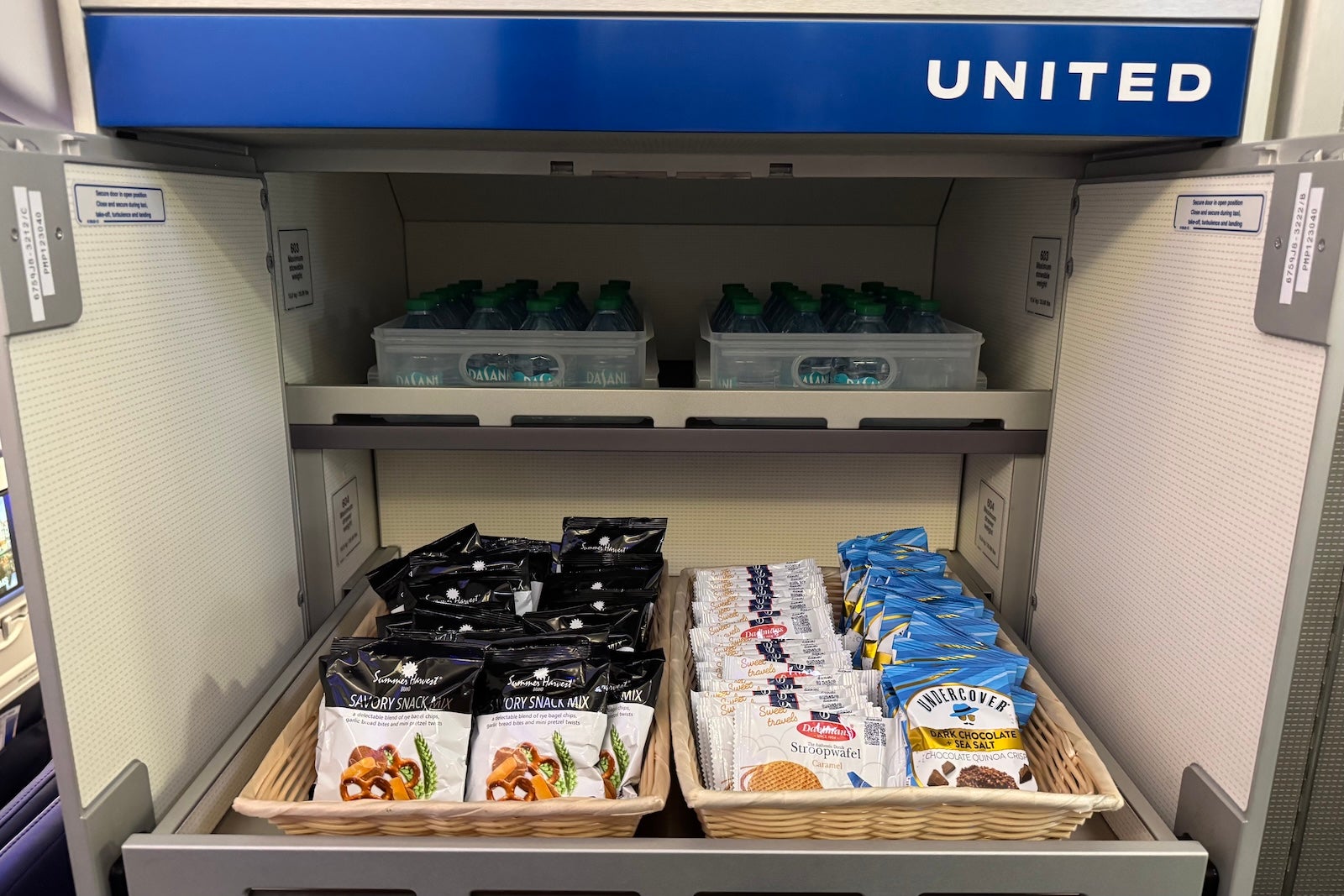
A handful of additional U.S. carriers have announced plans to offer their snack bars in the sky in the near future. JetBlue has offered a snack “pantry” for years on its long-range planes.
Couches in coach
Don’t want to splurge on a pricey business-class or premium economy seat?
United recently announced it would join Air New Zealand in offering a couch, of sorts, in economy.
Next year, the carrier plans to debut a product it’s calling its “Relax Row” on some long-haul flights.
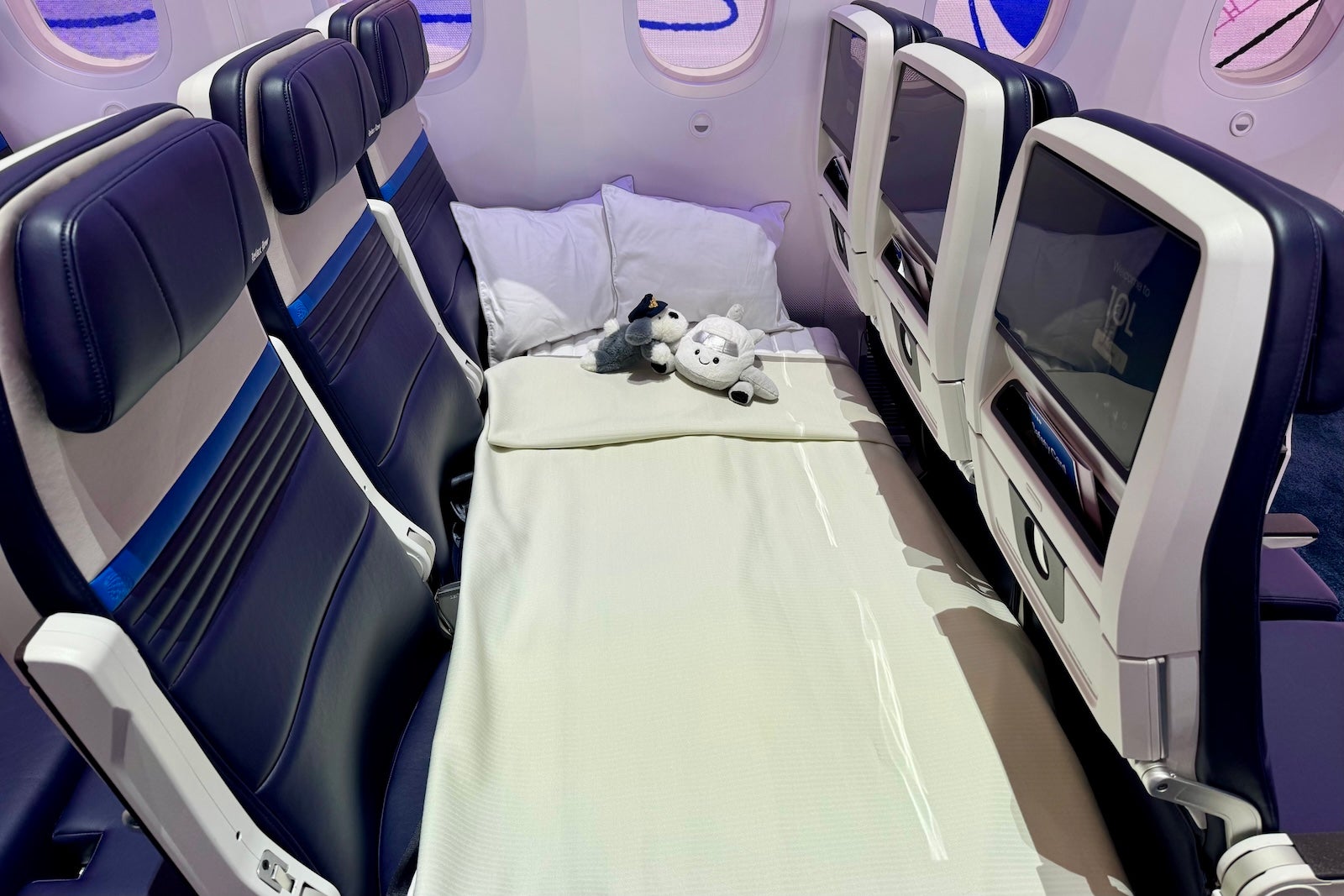
Available as a paid add-on, the concept allows you to turn three economy seats into one “bed.” The airline has framed this as a strong option for families traveling together.
The setup is similar to the “Skycouch” Air New Zealand has offered on its long transpacific flights for years.

United plans to outfit some of its largest twin-aisle jets with the “Relax Row,” including some Boeing 777 and 787 aircraft.
Economy bunk bed
How much would you pay for a few hours of shut-eye?
Air New Zealand plans to one-up itself soon with a new bunk-bed in coach.
The new “Skynest” concept will feature two sets of bunk beds stacked three high, with a ladder to reach the upper bunks.
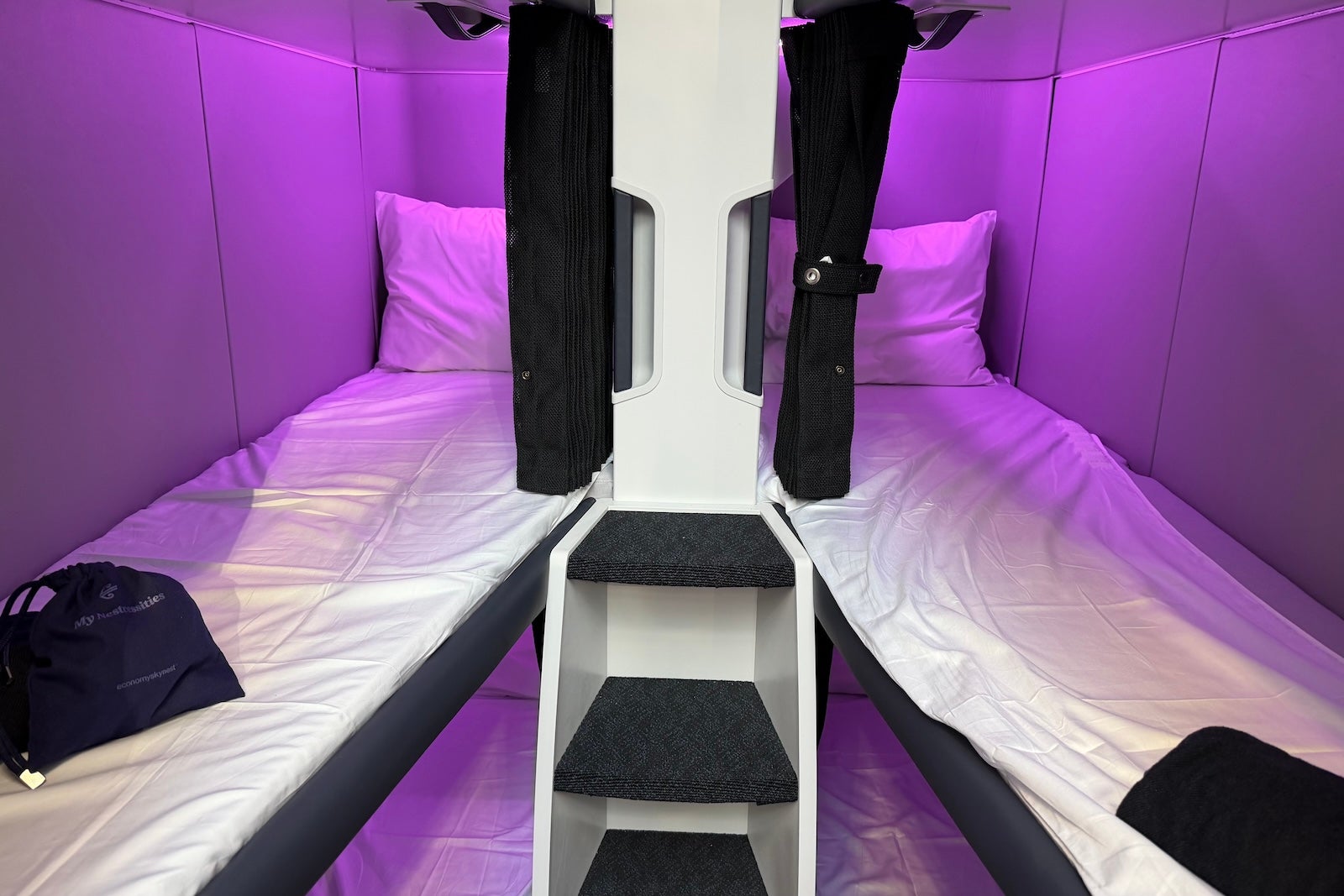
Passengers will be able to book a four-hour nap for an additional fee of $495.
It’s not business-class, but if your only goal is to get some sleep on a long flight from the U.S. to New Zealand, it could be well worth it.
On-board wellness zone
Speaking of ultra-long journeys, Qantas is preparing to launch the world’s longest flights.
Its “Project Sunrise” service from Sydney to London is scheduled to start in October 2027. The service will be followed by flights from Sydney to New York City.
On board the ultra-long-range Airbus A350-1000, passengers won’t just find new premium seating options.
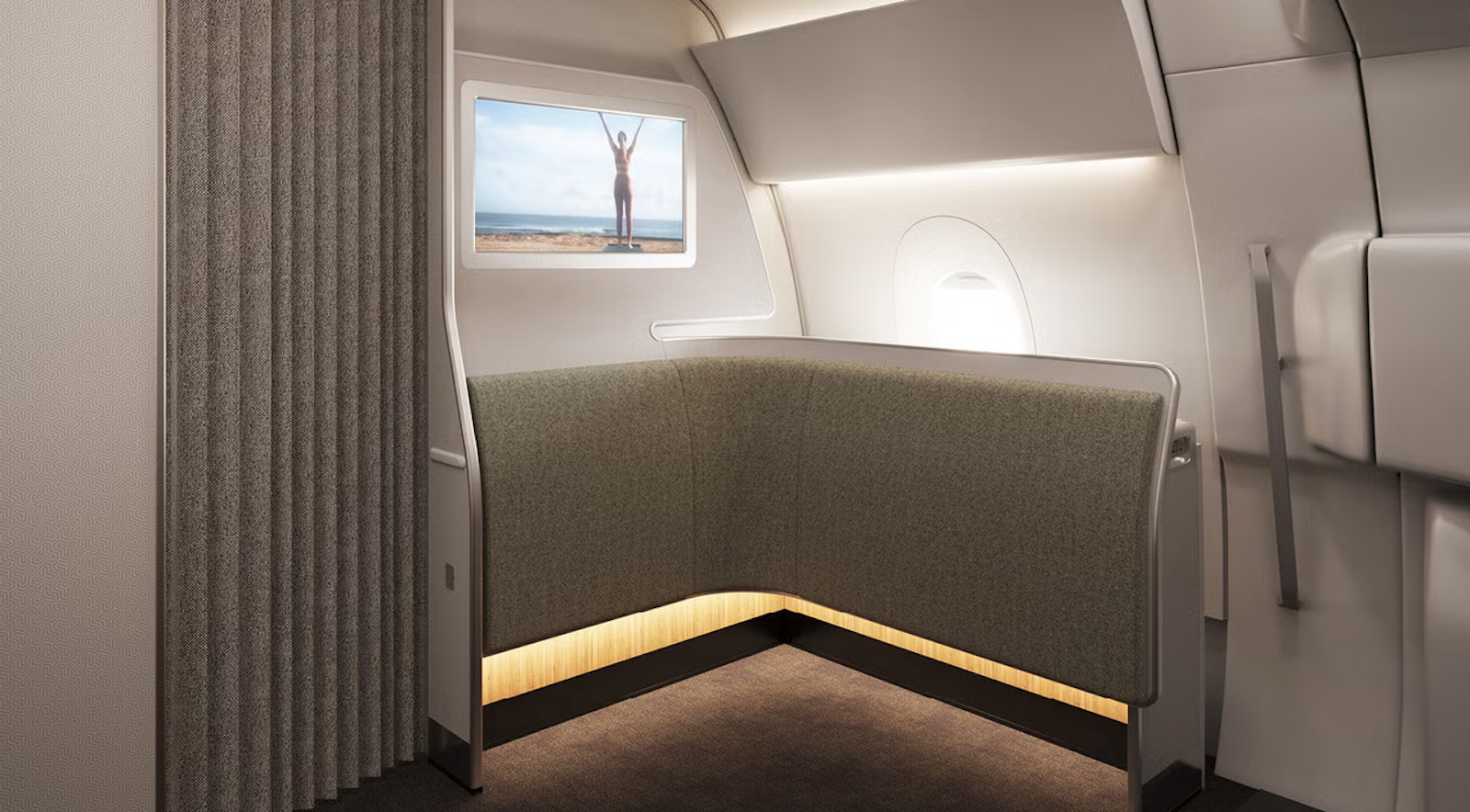
There will also be a “well-being zone,” where passengers can walk around, stretch — and maybe even do a few exercises.
That movement is crucial on flights that will span nearly a full day in the air.
Bluetooth, screens and streaming services
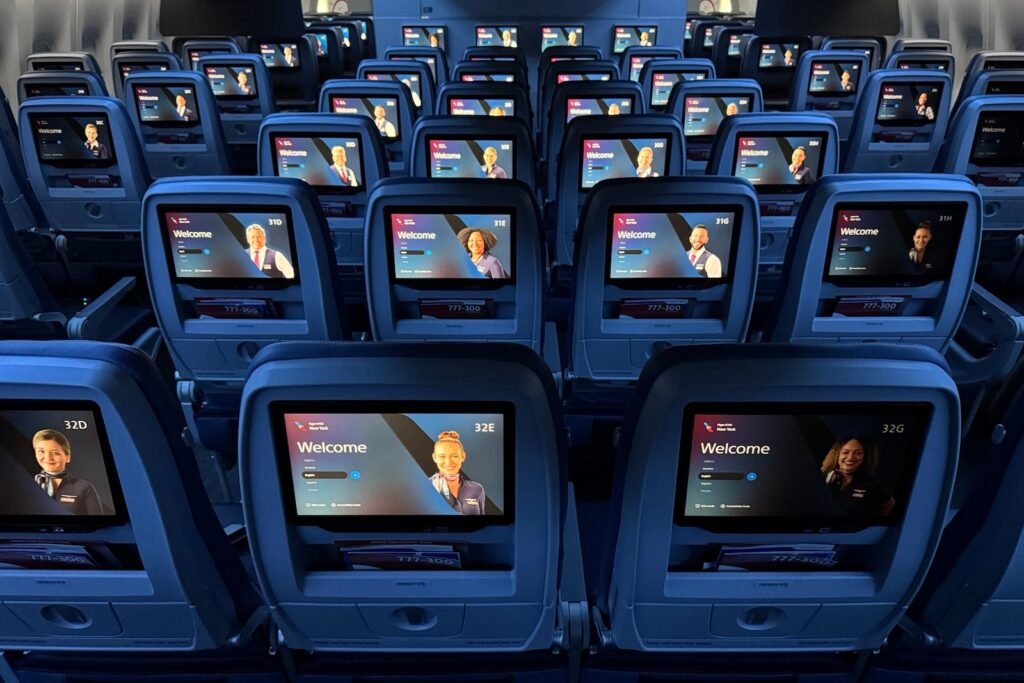
Meanwhile, even as passengers board with multiple screens and devices in their bags, airlines are doubling down on seatback screens.
In the U.S., they’re already a staple on United, Delta Air Lines and JetBlue.
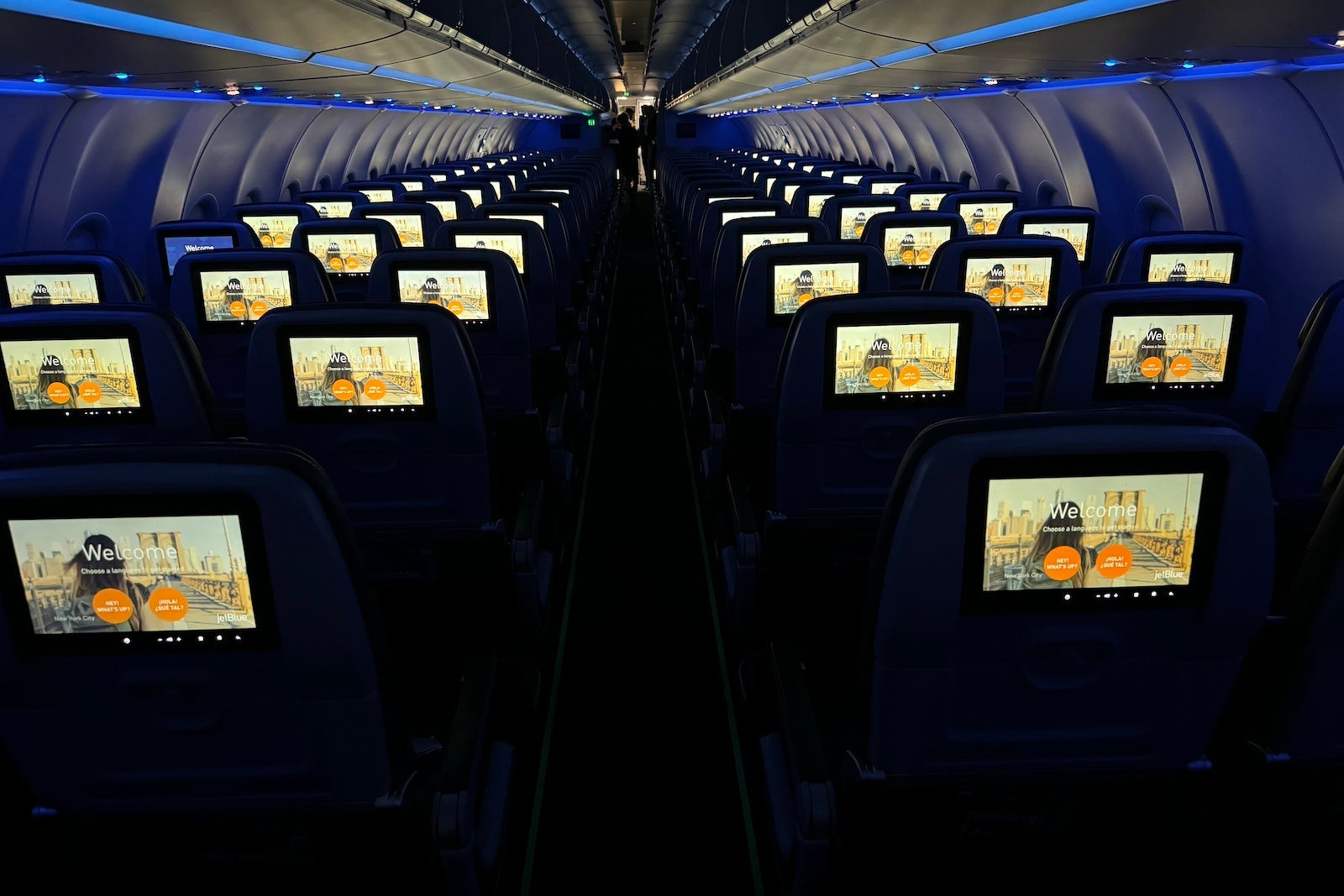
But carriers are also upgrading their seatback entertainment with better headphone technology, streaming services and entertainment options.
United has been working to equip all of its seatback devices with Bluetooth pairing technology, which allows passengers to connect their Apple AirPods and similar devices to the screens.
The carrier also recently rolled out a new partnership with Spotify, which lets flyers stream from their accounts on the seatback screen.
Delta, meanwhile, has launched a seatback partnership with YouTube — and is preparing to deploy new, next-generation screens with a host of new inflight features.
As all of that unfolds, American is pivoting back to screens after removing them from its planes years ago. It will be some time before they are widely available, though.
Airlines have also struck up content partnerships with major newspapers (like the Delta-Wall Street Journal tie-up) and streaming platforms (like United’s with Apple TV+).
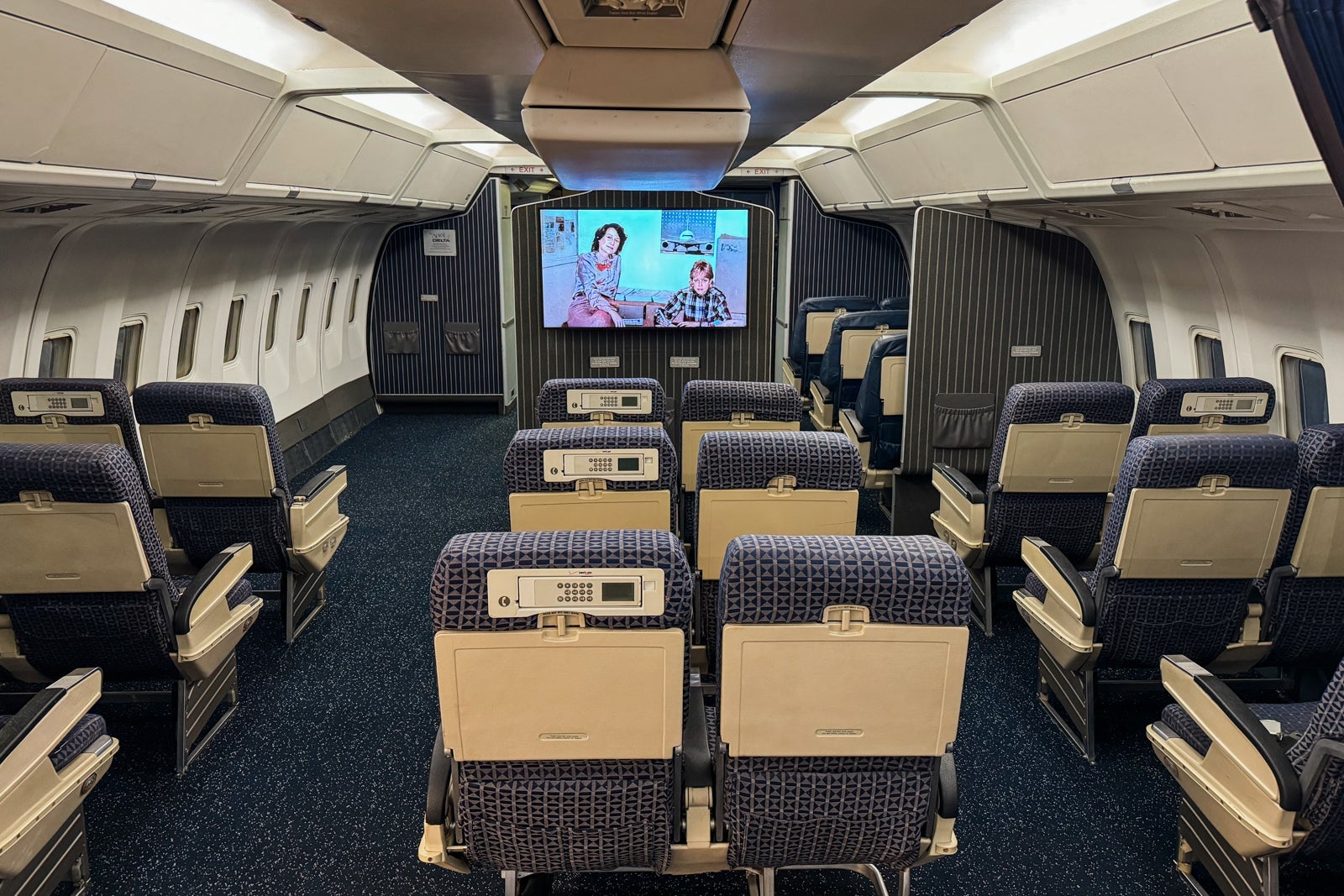
We’ve come a long way from the days when the whole plane would watch the same movie on communal screens.
Related reading: